plitbite

Restaurants · Hotels · Salons & spas

Your best waiter remembers every regular.
Now the whole place does.

Guests scan a code at the table and see a menu built around what they actually like, with the dishes you earn most on at the top. You get a dining room you can finally see. And everything the business learns is kept, so it is still there the day you hand it on.

  • Live in 24 hours
  • No new hardware
  • Keep the till you already own
  • Nothing for staff to learn

In service from the corner trattoria to the tasting menu Six venues across Bucharest, Lisbon and California.

Piazzetta degli Amici Table 12

Elena just scanned.

Guest
Returning · 4th visit
Avoids
Coriander, shellfish
Prefers
Vegetarian, natural wine
Last order
Truffle gnocchi, orange wine
Also seen
Casa Lumo, Lisbon · via network
Menu rebuilt for this guest 318 ms

In service

Piazzetta degli Amici Fine dining · Corbeanca
Re.Kolta Modern bistro · Bucharest
Madre Băneasa · Bucharest
Must Bistro · Bucharest
The Serving Spoon Soul food · Inglewood, California
E3 by Entourage Resto-bar · Bucharest
Works with what you have

Whatever you run, we can reach it.

Most software asks what you use, then hands you a list of the twelve things it talks to. We do it the other way round. There are only three ways to reach a system, and we do all three, so the question is never whether we can connect to yours.

Route one

It has an API

The clean way. We read and write directly, in real time, the way the vendor intended.

Route two

It has a login

No API, but it supports delegated access. You grant it, you can revoke it, and we never hold your password.

Route three

It has a screen

Nothing else on offer. An agent works that screen the way a trained employee would, with the same clicks. This is the one nobody else does.

Because of route three, "we do not integrate with that" is not an answer we have to give. If your supplier's system runs in a browser, it is reachable.

Does it work with… Ready

your till

Connected Route one · API

We have not yet met a system with all three routes missing. If it has an API we use it, if it has a login we use that, and if it only has a screen an agent works the screen.
  • Toast, Square, 7shifts, Mews · route one, a documented API
  • rKeeper, MarginEdge, KitchenSync, Fresha · route two, delegated login
  • The supplier portal from 2009, your accountant's spreadsheet, the one with no name · route three, an agent working the screen

Systems named here are examples from this trade, not a list of finished integrations. Which are live for you depends on your setup, and we will tell you exactly where you stand on the first call.

Make more per table

The bigger check is the one you notice first.

Same six dishes, same kitchen, same prices. The only difference is the order they appear in, and who the list was built for. We print how each number happens, because a percentage with no mechanism beside it is worth nothing.

€38.10

Average check before

One house list. Every guest sees the same thing, in the same order, whether it is their first visit or their fortieth.

€44.60

Average check after

Built per guest and weighted to your margins. Read over 1,240 covers at one venue, against its own baseline.A €6.50 lift on 60 covers a night is roughly €142,000 a year

40%

faster table turns

Ordering and paying stop waiting on a waiter, so the queue at the end of the meal disappears and the table frees up sooner.

25%

less spent on admin hours

Taking orders, splitting bills, answering the phone and building next week's rota stop eating paid hours.

more tips for your staff

Guests are asked at the moment they are happiest, and the money goes to the person who served them. Your team notices this in week one.

24h

from yes to live

Menu imported, codes printed, till connected. Nothing bolted to a wall and about ten minutes of briefing for the floor.

Figures from Splitbite venues, each measured against that venue's own baseline before go-live. Your numbers will be your own, and we will show you them the same way.

Show them what they want

One menu. Two guests. Same minute.

Not a PDF behind a code. An actual menu that knows who is holding the phone, and is rebuilt for them before it appears. Here is the same list, at the same table, for two different people.

A stranger First scan
Nothing known yet
01MargheritaHouse favourite€12
02Cacio e pepePecorino, black pepper€14
03Tagliata di manzoRocket, parmesan€26
04Burrata & heritage tomatoVegetarian€15
05Truffle gnocchiSeasonal€19
06Orange wine flightThree 75ml pours€16

Ranked by what the room orders most. It is the only order available when nobody knows anything about the person sitting down.

Elena, a regular 4th visit
Vegetarian Natural wine No coriander 2 courses, usually
01Truffle gnocchiShe has ordered this twice€19
02Orange wine flightMatches her palate · 68% margin€16
03Burrata & heritage tomatoVegetarian€15
04Cacio e pepePecorino, black pepper€14
05MargheritaOrdered once, not again€12
06Tagliata di manzoContains meat€26

Ranked by what she has actually ordered, checked against tonight's margins and what is in the walk-in. Nothing hidden, nothing invented. The same six dishes.

i She orders faster What she wants is at the top instead of somewhere on page two, so the decision takes seconds and the kitchen starts sooner. Table turns quicker
ii She spends more, happily The two dishes at the top of her list are also two of the three you earn most on. Nobody is being upsold something they did not want. €38 → €47 on this cover
iii She feels known Her allergy is handled without her having to explain it to a stranger again. That is the part that brings her back. She returns sooner

Putting a dish first only works if the photograph does.

A dish at the top of the list earns nothing if the picture next to it was taken on a phone in bad light. So we come and shoot your food ourselves, during setup and again whenever the menu moves. It is included, not an extra line on the invoice.

Afterwards you can change any of it by asking in plain words. Relight it, clean the plate, straighten the crop. No layers, no masks, no designer, no waiting a week for someone to get back to you.

Shot by us
Every dish, during setup and again when the menu changes
Edited by you
In plain language, by the person who knows the food
Your look by default
Your typefaces and colours, so it comes out looking like you
One library
The same images feed the menu, your campaigns and your own channels
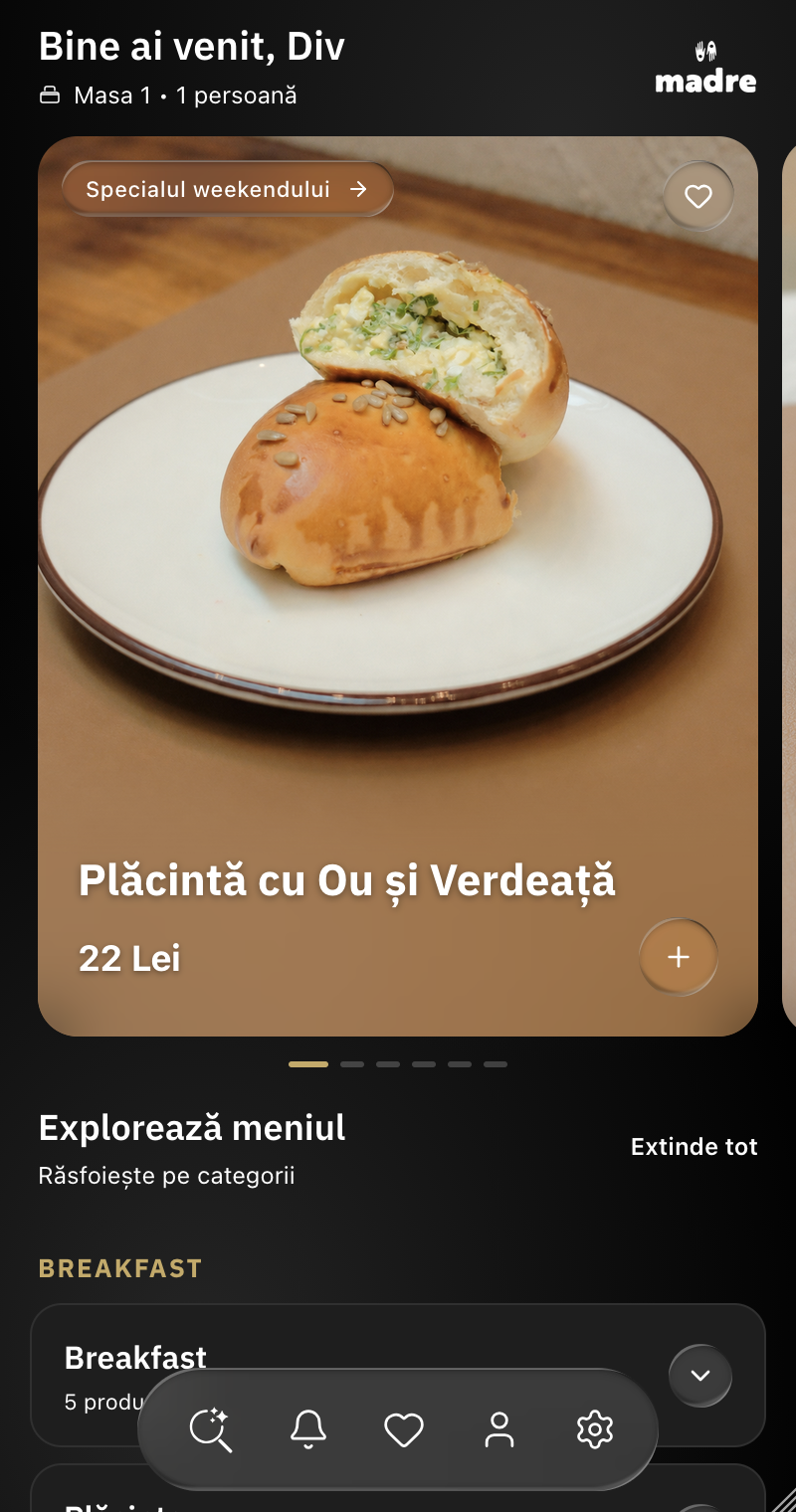
The Splitbite guest menu on a phone, showing dish photographs, pricing and personalised order

What your guest sees after scanning the code

Keep what you know

The recipes are written down. Everything else is in your head.

Which regular drinks what. Which supplier lets you down in August. How much lamb Easter actually needs. Why the Tuesday special is the Tuesday special. None of it is written anywhere, because you have never needed to write it down.

Hand over the keys and the memory goes with you.

When a family business changes hands, the next person inherits the building, the name, the staff and the debt. What they do not inherit is thirty years of knowing. They spend their first two years relearning things you already knew, and paying for the lessons twice.

This is the least technical thing we do and the one owners raise with us most often.

30%

of family businesses reach the second generation

The most quoted number in family business, and it has held up for decades.Oregon State University · the 30-13-3 statistic

13%

reach the third

Not usually because the food got worse. Because the thing holding it together was never anywhere but one person's memory.Oregon State University · the 30-13-3 statistic

01

It writes itself down

A by-product of a normal Tuesday.

Every serviceEvery order Every invoiceEvery price move

You are not being asked to document your business. Nobody has time for that, and the projects that try always die by week three. This is the ordinary record of the place running, kept properly instead of thrown away at the end of the night.

02

It answers what you would have answered

The questions a successor cannot ask you.

How much lamb?Who are the regulars? What sells in February?

How much lamb for Easter, and how that has moved over four years. Which sixty guests account for a third of your covers, and what each of them drinks. Which supplier put prices up last spring and what it did to the margin on your best dish. Asked in plain words, answered from your own history.

03

The regulars stay recognised

Even when you are not the one at the door.

Preferences heldAllergies held History held

The reason a regular feels like a regular is that somebody remembers. Once that lives in the business rather than in one person, a guest gets the same welcome on a night you are not in, from a server hired last month, or from your daughter five years after you stopped.

04

It does not retire

The one partner who never leaves.

Day one onwardsNever forgets Hands over intact

Think of it as a partner who came in on the first day, stood through every service since, and remembers all of it. It does not get tired, take a better offer, or walk out in the middle of August. When you go, it stays, and it briefs whoever comes next.

What the next owner opens on their first morning.

Not a folder of passwords and a shrug. The same screen you have been using, holding everything the business has learned since the day it went live.

It is also, bluntly, worth money. A buyer paying for a business with a documented guest base and four years of trading history is paying for something they can see, rather than taking your word for it.

The inheritance
Guests
4,180 profiles, with preferences, allergies and everything each of them has ordered here.
The regulars
The 60 who account for a third of covers, named, with what they drink and when they last came in.
The year
Four years of what sold when, set against weather, holidays and what was on in town.
The suppliers
Every invoice, every price change, every delivery that turned up late.
What worked
Every campaign ever run and what each one actually changed, including the ones that did nothing.
Day one
They ask it questions in plain words and get answers out of your history. Nothing walks out of the door with you.

Illustrative, to show the shape of it. What you hand over is whatever your own venue has accumulated by then.

Turn strangers into regulars

A first-time guest who behaves like a regular.

A guest's own preferences travel with them, with their permission. So somebody who has never set foot in your place can still walk in and be understood on the first visit.

Restaurants & bars Hotels Salons & spas A preference, moving Named venues are live. Network structure is illustrative.
01
Re.Kolta, Bucharest Tuesday

Elena says she is vegetarian and avoids coriander. She says it once, here.

02
A hotel restaurant, Lisbon Six weeks later

First visit. The menu already knows, because she agreed to bring her preferences with her.

03
Your dining room Whenever she walks in

A stranger to you, and yet not. That is the whole point of the network.

i Good for you You get useful signal on a guest from their very first visit, including all the people who would never have joined a loyalty scheme. Day-one signal
ii Good for them Say it once, be understood everywhere. No app to download, no card to carry, no explaining a shellfish allergy to a stranger for the fortieth time. Their choice, revocable
iii Your list stays yours What travels is the guest's own profile: taste, restrictions, preferences. Who dined with you, when, and what they spent never leaves your business. Never shared
Stop doing the admin

Most software tells you what happened. This one does something about it.

Nearly half of operators are spending more on technology this year, and fewer than one in ten say it has made a real difference. The gap is not ideas. It is that nobody has time to carry them out.Qu · 2026 State of Digital

01 It reads what you already have Your till, your bookings, your invoices, your reviews. Where a system has a proper connection we use it. Where it only has a screen, it works that screen the way a trained employee would, with a login you grant and can take back. Nothing ripped out
02 It puts the pieces together The Friday labour spike that only makes sense next to the weather. The dish whose margin quietly died when a supplier moved price. A match at the stadium and a public holiday count as data too. Inside and outside
03 It brings you the answer, done Not a chart to interpret. The idea, the poster, the email, laid out in your own typefaces, ready to go the moment you say yes. Change anything first if you want to. You approve, always
04 Then it tells you if it worked Measured against a normal week, and said plainly, including the times the answer is that it made no difference at all. Against your baseline
and round again, knowing a little more.

A Thursday in November.

Nothing here needed you to ask a question or open a report. This is the system noticing something on its own and bringing you a finished thing to approve.

Nothing goes out in your name without you seeing it. You can widen that later for the kinds of campaign you come to trust, and narrow it again whenever you like.

A worked example
It notices
Rain forecast for Thursday. Four kilos of salmon land Wednesday and will not hold past the weekend.
It suggests
A one-night salmon plate, offered to the 180 guests whose history says they order fish here.
It builds
Poster, story frame and email, in your typefaces and colours. Change any of it in a sentence, or send it as it is.
You approve
11:04. Live by 14:00, on the channels you have connected.
It reports
Measured against a normal Thursday. Nothing left in the walk-in.

Illustrative, to show the shape of the loop. Real numbers are yours, measured against your own baseline.

Fits your trade

Wherever a guest shows up.

The software you keep at the back changes with the trade: a till here, a room system there, a scheduler somewhere else. The guest is the same in all of them.

The table is the touchpoint.

Code goes
On the table, plus your phone line
Sits above
Your existing till and card machine, nothing removed
Makes money by
A per-guest, margin-aware list on every cover
Photography
Every dish shot by us, in your house style
You get back
Faster turns, fewer mistakes, tips reaching the right staff
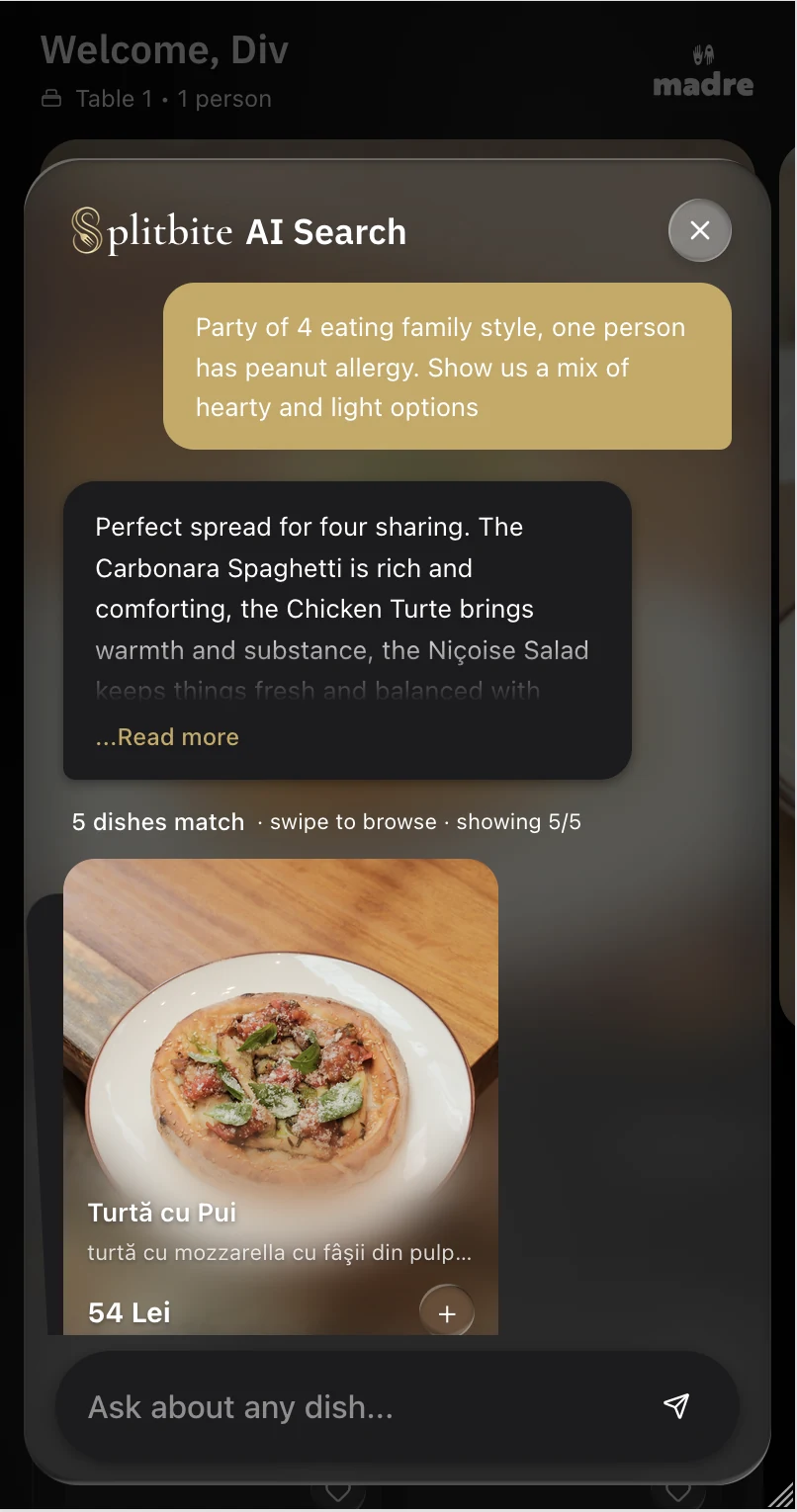
A guest searches for Turtă cu Pui on the Madre menu; the assistant returns the dish with pricing and a full photograph.

A real request, answered against real photography

Live by tomorrow

It is not a project. It is a Tuesday.

The reason hospitality software usually fails is that it asks you to change everything first. This asks you to print some codes and put them on the tables.

i Before you decide Twenty minutes on a call, using your actual menu and your actual numbers. You see the guest side, your side, and what it would do in your first week. If it is not obviously worth it, we will say so. No commitment
ii Day one, morning We import your menu, connect to your till, and send you codes to print. You do not fill in a spreadsheet and nobody comes to install anything. You do almost nothing
iii Day one, service Live on your tables. The floor briefing takes about ten minutes, and the honest version of it is "guests scan this, you carry on as normal". Live in 24 hours
iv That week We come and photograph your dishes. Guest profiles start filling in from the first service, so the menu is already reordering itself for returning guests by the weekend. Included
v Week two The first suggestion arrives, built from your own numbers, waiting for you to approve it. After that you get a plain summary on Monday mornings. You stay in charge

If it is not working, leave.

Monthly, no lock-in, and your data is yours to take with you. We would rather you stayed because the check went up than because a contract said you had to.

Book the twenty minutes
Straight answers

The objections, taken seriously.

Isn't this just another QR menu? My guests hate those.

They do, and they are right to. Surveys keep finding a large majority of diners prefer a printed menu, and one 2024 study put it as high as nine in ten.

That is a fair verdict on what QR codes were used for: saving the cost of printing and the cost of staff, with nothing offered to the guest in return. A static PDF behind a code is worse than paper. The only good reason to put a screen between you and your guest is if the screen knows something paper cannot: who this person is, what they cannot eat, what they loved last time. And anyone who wants a printed menu should still be handed one.

Do I have to replace my till?

No, and that is deliberate. Rip-and-replace is why most hospitality technology projects stall halfway. Keep your till, your card machine, your payroll and your accountant. We read from them and write back into them, and your staff carry on using the screens they already know.

I'm not technical. Is this going to be my problem to run?

No. We set it up, we import the menu, we shoot the photography, we connect the systems. What is left for you is approving things you can read in plain English and deciding whether you like them.

If you can read a delivery note and reply to an email, you can run this. The floor briefing is ten minutes because there is almost nothing for staff to learn.

What happens to all this if I sell up or hand over to my kids?

It goes with the business, which is the point. Everything the system has learned since the day you went live is part of what you hand on: the guest profiles, the trading history, the supplier record, every campaign and what it did.

Whoever takes over opens the same screen you have been using and can ask it questions in plain words. They do not spend two years relearning what you already knew. And if you are selling to somebody outside the family, a documented guest base and four years of history is something a buyer can actually inspect, rather than taking your word for it.

The account moves with the ownership. It is your business's record, not ours.

If preferences travel between venues, are you handing my customers to the place down the road?

No. Two different things are being mixed up here, and the distinction is the whole design.

Your customer list, meaning who dined with you, when, and what they spent, is yours and stays yours. What travels is the guest's own profile: preferences, allergies and taste, which belong to them, move only if they agree, and can be inspected or deleted by them whenever they like. A competitor never learns that a particular guest visited you. The guest simply does not have to explain themselves twice.

Do I need a photographer and a designer to make this look good?

No, and you do not need to hire either. We shoot your dishes during setup and again when the menu changes, and it is included. Afterwards you change images by asking in plain words rather than by opening a design tool.

Campaign artwork works the same way. It comes out in your typefaces and colours by default, so posters and emails look like you without anybody designing them.

Will it post things in my name without me seeing them?

Not unless you decide it should. Campaigns are drafted and then wait for you. You see the idea, the artwork and where it is going before anything is published, and you can change or bin any of it.

You can loosen that later for a kind of campaign you have come to trust, and tighten it again at any time. The default is that a human says yes.

What happens when it gets something wrong?

Anything touching money, stock or staff waits for your approval before it runs, and every action is logged, reversible and attributed. You decide what it may do alone and what it must bring to you, and you can tighten that at any point.

On allergies specifically: the menu handles dietary preferences, but a guest with a serious allergy should always tell a member of staff. We say that in the app too. Software should not be the last line of defence on something that matters that much.

We're one small place, not a group. Is this for us?

Yes, and small independents get the most out of it. A chain can already build a picture of a guest across its own sites. A single venue has no way of knowing a first-time guest at all, and no chance of building the thing a chain has. That is exactly the gap this closes.

See it running on your own menu.

Twenty minutes, your actual menu, your actual numbers. You will see the guest side, your side, and what it would do in your first week. If it is not obviously worth it for your place, we will tell you.

Based in
Romania, USA, Spain, France and Turkey
Reply time
One working day
Terms
Monthly, no lock-in, your data leaves with you

Book a walkthrough